Click on any headline to view the full article...

A Conversation with Toby Frost

Ten Thousand Cheers for the Internet!  Now when we find new authors whose books we enjoy, we needn't just sit patiently waiting for them to write the next one: oh no, we track them down on Facebook and bombard them with impertinent questions*.  By way of example, Philip Reeve has been talking to Toby Frost, author of the Space Captain Smith series of sci-fi comedies.

*Not that I mind if you want to track me down on Facebook - in fact, I encourage it. PR.. 


PR:  Since my own books are marketed to children, and half the people reading this may be school librarians, I ought to kick off by pointing out that the Space Captain Smith series aren't childrens books; they contain sex, drugs and rock'n'roll, and also a great many references and in-jokes which will probably whip straight over the heads of the Youth of Today.  I noticed nods to dozens of influences I remember from my own teenage years, from Blade Runner and Alien to Kate Bush, Kenneth Williams and JG Ballard (and what a supergroup they would have made!) I think I even spotted a line from Excalibur.  Can I take it that you did your growing up in the seventies and eighties too? 


TF: Yes, I was born in the late seventies, so that’s where a lot of the references come from. Good work spotting Excalibur, by the way. I love that film. 

PR:  I think I owe my whole career to it: it led me to all the other versions of King Arthur, to Tennyson and Eliot, the Pre-Raphaelites, the symbolists - it's what I had instead of university!  I saw it so many times when it was released that I think the whole screenplay is engraved line-for-line on my memory.   Anyway, how did you come to write Space Captain Smith?

TF:  Smith wasn’t my first novel, but it’s the first I got published. It was actually a diversion I wrote while writing some longer stories (serious ones!) set in a fantasy world inspired by Leonardo’s drawings, a sort of clockwork Renaissance. One day I happened to be talking to a friend who was reading HG Wells. We got joking about the idea of Victorians conquering the moon and demanding gin from its baffled inhabitants, and it all went (downhill) from there. Smith slowly changed from a set of sketches to a full novel, and then I had this idea about tea... Finding a publisher is, unless you’re immensely lucky and writing about vampires, very difficult. I actually sent my manuscript to Myrmidon, my publishers, before I entered a competition in The Telegraph to send in the first 1000 words of a novel. I got to the last 50 entries, which helped my application to Myrmidon very much. Basically, anything you can point to that shows you know your stuff helps. How did you get published?

PR:  A similar process, I suppose.  I tinkered around with various versions of Mortal Engines all through the 1990s, and sent it off to lots of literary agents who weren't remotely interested.  Then I showed it to Scholastic, for whom I'd done some illustration work. One of their editors, Liz Cross, liked it, and encouraged me to re-write it as a children's novel.  Were there any other writers who were particular influences on the development of your style?

TF:  Whenever people ask me about my comedic influences I tend to mention George Orwell and Raymond Chandler. Perhaps not the best joke-tellers, but they both perfected the difficult trick of saying very intelligent things in an unaffected way that packs all the more weight for its simplicity (actually, now I think about it, their styles both get parodied in the novels, along with H P Lovecraft).  I’ve always liked comedy that can say stupid things cleverly, or be clever about stupid things, and I always think Blackadder is a great example of that. There’s one episode where they’re being pursued by a mad bishop who wields a red-hot poker, and suddenly Percy starts to quote Richard II by Shakespeare. Then Blackadder childishly insults him and makes a joke about poo. Great stuff!

PR: Personally, I have a slight aversion to double entendres and blue jokes.  I think it goes back to my early teens when the only TV in the house was in the living room and I had to endure the awful frosty disapproval of my mum if I was watching Not The Nine O'Clock News or Kenny Everett and they got a bit risqué.  I'm sensing you have no such qualms?

TF: As far as jokes are concerned I’ve cut about two out of my drafts for being too vulgar and tasteless (and a fair few more for being too rubbish). I didn’t consider child-friendliness when I wrote the novels: I always saw them as 12+ in terms of cinema ratings, and probably 13-15 or so reading-age wise. But it depends how you define bad taste: vulgarity of the farts-and-burping sort doesn’t both me too much, where as mocking the afflicted is cheap. For all their crassness, cowardice, promiscuity and homicidal mania, the main characters are a pretty decent bunch. When it comes down to it, they’re alright. Even Carveth isn’t really cowardly – she’s just sane. Not that I’d hold them up as role models as such...

PR:  Most 'Steampunk' books which deal with the British Empire seem to do so in order to denounce it, but your books seem more Ealing Comedy than Steampunk, and your future British Space Empire is basically benign, championing freedom and the common man against totalitarian foes.  It's also full of odd little affectionate details of British life like Airfix kits and branches of Debenhams.   Do you hanker for a return to decency, tea-drinking and stiff upper lips? 

TF: As regards the (First!) British Empire, and its portrayal, I agree that it inevitably casts a long shadow. I really had a choice as to whether to make the Imperialists evil and callous or just a bit silly, and I felt that the former had been done to death and would make the books too sour to be the jolly, Biggles-style adventures that they are. Also I think it’s more interesting to talk about imperialists who sincerely believe they are doing good: that attitude permeates the space empire, even down to the fact that Smith’s huge revolver is called a Civiliser. That to me is far more interesting than a simple “Empires are evil” statement – and has more potential for comedy. Of course, it helps that the Ghasts and Yull are infinitely worse than the people they want to replace. Pretty much anything is better than being ruled by (ie murdered by) Number 1 or the Greater Galactic Happiness and Friendship Collective. And anyway, you can’t really rule people like Suruk with a rod of iron. They’d just take it off you and bash you with it.

Do I hanker for a return for tea, decency and stiff upper lips? Yes, although not a literal return with everything that entails . Although the past has always been worse than the present for almost everyone, it’s hard not to feel that something hasn’t been lost along the way – an idea of how we ought to be more than something we actually were. Sometimes I wonder if we don’t indulge ourselves too much in public, or that we put up with too much nonsense from people who like sounding off (unlike this particular rant. I’m much less of a reactionary than I probably sound). Anyway, I think there is something quite distinct about being British, a positive set of values beyond just a rather woolly sense of tolerance. I’ve certainly heard steampunks talk about trying to reclaim those values, chief among them politeness. Good on them!


I think one of the main problems with steampunk is that it can actually be difficult to find new things to say. If you’re not careful, you can end up shuffling a very small pack of cards until it all feels a bit like Cluedo: this time round it’s Charles Babbage versus Captain Nemo, and on the next shuffle, Holmes and Grace Darling will be fighting the Martians (both of which I’d happily read. Especially the latter). I like steampunk very much, but I think it needs to be approached carefully to avoid being defined out of existence. It’s actually one of the things I like most about Mortal Engines: although the setting is totally original, that crucial steampunk sense of home-made, one-off technology is still there.


PR:  Ooh, I'd definitely read the Grace Darling one: I had quite a major crush on her when I was about seven ( they did her life story on Blue Peter).  And I know exactly what you mean about Steampunk - although actually it seems to have become such a vague term that I don't really think it means much any more.  I was relieved at how un-steampunk Smith is.  I also thought the characters were unusually well-rounded for a comic novel.  Where did Smith, Carveth, and Suruk the Slayer spring from?

TF:  I always wanted the Smith books to be properly worked-out: that the world, however bizarre, would have its own logic and wouldn’t be just slapstick. While I like all the jokes, of course, I also intended the stories to stand as novels in their own right. I think that’s why I tried to make the characters rounded, and also why there is actual death. I also think it gives the stories a bit more weight. The main characters are in part parodies of stereotypes (explorer, noble warrior etc) and are foils for one another, but I always wanted them to be more developed than that. Sending them on adventures with each other makes them round each other out, too. Strange as it sounds, given that he’s a headhunting, war-obsessed alien monster, I wanted Suruk’s homecoming in Didcot to be a little poignant as well as absurd. In a funny way you find you owe it to your characters. (Please tell me I’m not alone in this!)

PR: I don't think you are!  Suruk is an utterly likeable character, despite the whole head-hunting alien monster thing.  And I found the friendship between him and Smith (and him and Carveth, in a way) to be oddly touching.  I think that's what makes the books, for me, ultimately more satisfying than things like Blackadder, where all the characters are basically villains or idiots.  They are also war stories, and despite all the comedy there is a very convincing sense of danger in the combat scenes  - Carveth's fear at going into battle is very well portrayed.  Do you have a 'serious' adventure story waiting to be written?

TF: I do have a serious novel: it’s an almost complete redraft of the clockwork Renaissance story, and I’m very proud of it. Basically, it’s a revenge drama about a woman returning to a city to kill a gangster who left her for dead. However, the gangster is now a wealthy merchant, and things become more complicated as, in her quest for revenge, the heroine is drawn into the efforts of various feuding nobles to seize the throne and ends up almost as a power in her own right. I loved writing it, but it’s proved hard to find a publisher as yet. It’s got the makings of a trilogy, but I’ll clear the first hurdle of getting the first story published before anything like that!

PR:  Good luck, and thanks very much for doing this interview!


You can find more about Toby and his books at www.spacecaptainsmith.com.

Space Captain Smith

By Toby Frost
Reviewed by Philip Reeve

Most of the books which the Bee has recommended recently have been aimed at children, so please note that Toby Frost's Space Captain Smith isn't, containing as it does industrial quantities of smut and innuendo.

Space Captain Smith is set in the 25th Century in a region of space dominated by the 'Great Powers' of Earth, including a revived British Empire keen to export cricket, tea and fair play to the farthest reaches of the galaxy.  This suggests that the book will be wedged firmly in the 'Steampunk' cul-de-sac,  an impression which is strengthened by Angelo Rinaldi's splendid cover artwork, itself a spoof of the current UK covers for George MacDonald Fraser's Flashman series .

In fact I was surprised by how un-Steampunk Space Captain Smith is: it's true that Smith wears a red tunic, carries a service revolver and prides himself on his well-waxed moustache, but the cultural references are mostly contemporary (his ship's android pilot rather worryingly consults a Haynes manual before take-off) and Smith's muddleheaded but basically decent form of Englishness seems more 1950s than Nineteenth Century.  The technology is purest sci-fi, with no actual steam involved, although Smith's ship suffers from a bent cam-shaft at one point.  The story is also dotted with parodies of movies like Blade Runner, The Matrix and A Clockwork Orange, further diluting the Steampunk aesthetic.  (This is a Good Thing: I like my Steampunk diluted to almost homeopathic levels these days.)

The plot is brisk and workmanlike: Isambard Smith (who isn't a Flashman-style cad at all, but a rather dim, well-meaning, upper class twit) is sent to fetch a woman named Rhianna Mitchell from the hippy-ish space habitat of New Francisco, which is under threat from the fascist ant-men of the Ghast Empire.  His ramshackle spacecraft the John Pym is piloted by runaway android Polly Carveth, and also along for the ride is Smith's old friend Suruk the Slayer, a Predator-like alien warrior obsessed with collecting skulls and much given to saying things like, "Moons have passed since last we met, battles fought and enemies fallen.  At the bridge of Anrag I took fifteen heads..."  How he became Smith's friend is never explained, but it's lucky for us that he did, since his cheerful psychopathy makes him the book's  most memorable character, and the source of many of its best jokes.

The three central characters are all likeable and well-drawn, so it doesn't matter that everyone else is basically a charicature.  The planets which our heroes visit all seem to have been terraformed according to national stereotype; there's a gloomy post-Russian world full of rotting concrete tower blocks, and a Dixieland bayou planet ruled by 'The Republic of Eden', which basically represents all the things Brits hate about the U.S - religious fundamentalism, gung-ho military types and fat people in pastel leisure suits. (There is a rival 'United Free States of America' which remains off-stage in this book - presumably they stand for Rock'n'Roll, Seinfeld and HBO dramas.)  New Francisco is full of health food shops and meditation groups, while British-ruled planets tend to have names like Didcot and New Dorchester.  There's also a planet of cyberpunks who dress like characters from The Matrix (one lady is described as 'wearing tight shiny things, as if hit by bin-liners in a wind-tunnel') and a rainy world modelled on Blade Runner ("Go to a Different Off-World Colony!" suggests the advertising blimp drifting over the mean streets).

These brief movie parodies are all jolly enough in a Mad Magazine way, but I found them a bit obvious; Toby Frost's own world was more interesting, and I wanted to get back to it.  I far preferred the subtler references ("Aliens could look like anything," says a character who has obviously watched Star Trek, "They might look just like us except for some extra bits on their heads...")

 I was also a bit put off by the almost ceaseless innuendo.  I know that the double entendre is part of a long tradition in British comedy, from Max Miller and saucy seaside postcards through the Carry On films and TV shows like 'Allo 'Allo, but, let's be honest, all those things were rubbish.  Sexual innuendo was only ever funny because it had a shock value in a society where sex itself could not be mentioned.  We no longer live in such a society, so lines about 'being taken up the bayou' etc. etc. are just a lazy substitute for humour; the empty husks of gags our grandparents might have sniggered at.  There are times when Space Captain Smith swerves dangerously close to becoming a sort of Carry On Stainless Steel Rat.


Humour is always a hit-and-miss affair, however, and Toby Frost's jokes work far more often than they fail.  He's often very funny, and, more importantly, he can write.  His book is at its best when it stops frantically referencing other things and is just itself: the action scenes in particular are surprisingly gripping and well handled, and the universe he has created, for all its deliberate silliness, has a certain hand-made logic of its own.


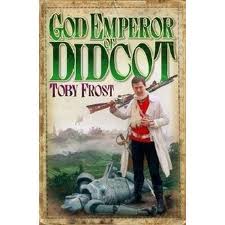
Space Captain Smith probably won't change your life, but it's not meant to.  It delivers some good gags wrapped up in a story that will keep you turning the pages, and it might brighten up a wet weekend, or while away a train journey: I'm always pleased to find a book that does that.  There are already two sequels, God Emperor of Didcot and Wrath of the Lemming Men, and I shall be ordering both of them as soon as I've posted this.  Three cheers for the British Space Empire!


Toby Frost's Space Captain Smith website, including some downloadable short stories, is here.

Cowboy Jess

Reviewed by Philip Reeve


I have to declare an interest here: Cowboy Jess is dedicated to my son Sam, and Geraldine McCaughrean is one of my all-time favourite authors (I doubt that I would have ever got around to writing my own novels at all if I hadn't read Fire's Astonishment and Vainglory).

She is best known for her magnificent children's novels, which include The White Darkness, A Little Lower Than The Angels, Plundering paradise, Stop The Train and, most recently, Pull Out All The Stops, and she also finds time to operate a secondary career as a re-teller of myths, legends and literary classics.


Cowboy Jess and its sequel, Cowboy Jess Saddles Up, fit neatly between these two strands.  Short books, aimed at a slightly younger age-group than the full length novels, and packed with what the children's book world calls 'boy appeal', they revisit the American west of Stop The Train in stories of almost mythic simplicity.  The Wild West backdrop is sketched in convincingly, and the landscapes are wonderful, but historical accuracy isn't an issue here: this is the legendary West of John Ford movies and schoolyard games of cowboys and injuns: Cowboy Jess himself might as well be Theseus, or King Arthur.  He is discovered on page one as a baby, curled up asleep in a coonskin hat between the wheel tracks where a wagon train has passed.  His upbringing by the kindly folks of a newly-founded frontier town is dealt with briskly in the first few pages, and pretty soon he's old enough  to sign on as a cowboy at the local ranch.  The problems which face him are quickly overcome by bravery, good nature and quick thinking, and in the course of the first book he captures a horse thief, saves the stage-coach from bandits and befriends a Lakota girl, Sweet Rain.

He also acquires a magnificent black horse named Destiny, who reminded me slightly of the old Champion, the Wonder Horse TV shows, which were still being repeated on Saturday mornings when I was Sam's age.  I can't remember much about them now except for the theme tune ("Champierrrnnnnnnnnn, the Wonder Horse...") and the fact that the excitement promised by the title sequence (all indians, stage-coaches and galloping horses) was never really delivered by the show itself.  The Cowboy Jess books avoid this pitfall with carefree ease; they are all indians, stagecoaches and galloping horses.   For older readers they may not have the same depth or scope of Geraldine McCaughrean's longer books, (and clearly aren't meant to) but they are still well worth reading, if only so that we can marvel at her nimble storytelling and the brilliance of her language (at one point, when dawn breaks after a night on the range, she describes a band of light appearing along the horizon 'as if the sky was lifting its hat to a lady').  For boys and girls who love adventure they are just about perfect.  Order them now and encourage a bit of half term/summer holiday reading.

Cowboy Jess and Cowboy Jess saddles Up are both published by Orion, RRP £4.99

Big Daddy vs Giant Haystacks

Review by Philip Reeve.

Last year I reviewed Those Magnificent Men, Brian Mitchell and Joseph Nixon's brilliant little play about Alcock and Brown, which used the story of those pioneer aviators to explore history, the nature of fame, and the recent trend for using real-life figures as the basis for plays which explore history and the nature of fame.  Their latest work, Big Daddy vs Giant Haystacks, which premiered on Wednesday night as part of the Brighton Festival, takes a similar approach.  With two small chairs and two large actors, it recreates the period from 1972 to 1988 when British Saturday afternoon TV schedules were dominated by scenes like this...


In some ways Big Daddy... is even more ambitious that its predecessor.  Actors Ross Gurney-Randall and David Mounfield don't just portray Big Daddy and Giant Haystacks, but an immense supporting cast of lesser wrestlers, managers, and TV executives; there are even walk-on parts for Paul McCartney, Frank Sinatra and Princess Margaret.  This constant switching from one role to another, one accent to the next, must be hard work for the actors, and would be hard work for the audience too if the writing were not so accomplished.  As it is, the characters are always careful to remind us who they are, to keep up to speed on what they're doing and what's happening in the wider world of wrestling at each particular moment.  It's all as funny as we've come to expect from Mitchell and Nixon, but it's never just funny: they have a deep sympathy for the people they write about.  Ross Gurney Randall's Big Daddy is particularly impressive; reluctant at first, then half believing his own publicity; his unease at having to visit the bedsides of dying children as part of his brother's publicity schemes, and his grief and guilt about the death of an opponent, are exceptionally well-drawn; he's almost a tragic figure (albeit a 26 stone tragic figure in a spangly leotard).

Our narrator for much of the evening, and the ring-master who holds all the disparate strands together, is Max Crabtree, Big Daddy's brother and manager.  He's played winningly by David Mounfield as a cheapskate north-country Machiavelli who dreams of "owning the whole of wrestling".  "I'll be your Virgil in this Dante's Inferno," he tells us as the show begins, and goes on to set the tone for much of what follows; "That's not the kind of reference I'd make in real life, but this is a play and I'm a sort of semi-fictional character, so I think we can get away with it..."

Stingy, scheming and manipulative, Crabtree could be easily be the play's villain, but he's too well-drawn, too fully rounded to be just a heel.  That role is reserved for Greg Dyke, best known nowadays as a dodgy Director General of the BBC, but who cut his teeth on London Weekend Television's World of Sport programme, and was responsible for taking wrestling off TV.  Portrayed by Ross Gurney-Randall as a venomous cockney psychopath, he embodies one of the show's themes; the shift of power from the north in the 1970s to the London 'barrow boys' who dominated the 1980s.  The tussles between Big Daddy and Giant Haystacks are the visual and comic highlights of the piece, but the real battle comes in the scene where Dyke and Max Crabtree confront one another; a high-stakes bout with the future of wrestling as the prize.

We know who won in the end, of course.  The London elite who run British TV didn't like wrestling and didn't want to show it, and without TV it withered.  It's not something you hear much about these days. Nostalgic TV shows and newspaper articles are forever exhuming the pop-culture detritus of the 1970s, but they tend to focus on things which middle-class North Londoners approve of, not these embarrassing pantomime gladiators whose fanbase was always in the provinces.  As well as giving us a laugh, this well-researched play is drawing attention to an odd little corner of our culture that has been not so much forgotten as deliberately suppressed.

That said, the eagerness with which the Brighton Festival audience joined in Big Daddy's signature chant of, "Easy!  Easy!" suggests that fond memories of wrestling survive even among hip urban types in the south east.  When it tours the north, Giant Haystack's final soliloquy, in which he predicts that 'Wrestling will be back!" is going to bring the house down.


A tour of Big Daddy versus Giant Haystacks is planned for later in the year, and I shall post details both here and on my own blog when the dates are confirmed.

One is now Hitched...

By the Bee's Royal Correspondent, Andrew Gorton.


“Are you following the Royal Wedding today?” I asked the Scottish manager of my Norfolk village shop when I popped in on the day of the event. 

“Why should I celebrate a family that raped and pillaged my family and forced them out of their country?” he replied, less than half-jokingly. “I've spoken with family in the Highlands, and their kids are not having a day off school there.”

This has probably been the only passionate, albeit negative, reaction to the Royal Wedding I have encountered so far. The prevailing attitude has seemed to be one of sublime indifference. (When I expressed my own less-than-lukewarm attitude on Facebook, it got several 'Likes.') Everybody is glad for the day off, but that appears to be the extent of their enthusiasm. On the other hand, I hope Wills and Kate have better fortune in married life than Diana had. I think some lessons from that marriage have been well marked for this one. Hopefully there will be no conspiracy theories surrounding this marriage, now or in the future. I'm fairly certain that Charlie is not planning to bump off his new daughter-in-law at some point in the next few years. Personally, I'm surprised there isn't a theory that says Diana and Dodi faked their own deaths and are living anonymously in South America with Shergar and Lord Lucan, or something. I am half-tempted to try and circulate that one, to see how many people buy it.

Across the pond, the Americans seem far more fascinated and enthused by the Royal Family than us Brits. (Certainly many of them seem to believe the “Diana was murdered” theory.) Considering that their nation was born as a result of successful revolution against the British Monarchy, it seems rather an odd attitude to have, exactly the opposite side of the coin to my Scottish acquaintance. Maybe it is the fact that the Scots failed in their uprising where the Americans succeeded that explains the difference? I'm not sure. Certainly the Scottish clans suffered more at the hands of the English kings than the American colonists.

In my opinion, the modern Royal Family are just another aspect of celebrity culture, but with more pomp and tradition. I am inclined to view this wedding as no different, really, than any other  celebrity wedding, although with slightly more gravitas. There are certainly the screaming crowds and an overemphasis on what everybody is wearing, and inane waffle from news commentators.  To be fair on the other hand, none of the Royals, with the possible exception of Kate, sought nor possibly desire their status in the public eye. I could sympathise with Prince Harry when he was pulled from front-line duty in Afghanistan. It must be frustrating not being able to do the job you wanted to to, and had undergone rigorous training for, just because of who your parents are. Also, watching films like The Kings Speech does humanise them for me.

Watching bits of the event today on the telly, I am sure it was not always like this for the royals. I have a picture in my head of the Saxons marching off to fight the Battle of Hastings to hysterical public adulation, with vapid commentary on Armour by Ralph de Lauren, and speculation on whether Harold is going bald under his Jeffrey of Portman Helmet. Then, a few days later, tabloid hysteria of this new bloke, William the Conqueror's questionable taste in interior decoration or something. 

It is possible history may go full circle and the Royals will become more than just figureheads, but it is unlikely. I am sometimes prone to the cynical belief that this is pretty much a Bread-and -Circuses event, but in the end, I am sure it is a harmless and much needed diversion from an otherwise grim couple of years. 

A Conversation with Mark Robson


If you've attended a UK secondary school during the past ten years there's a high likelihood that you've met Mark Robson, author of rip-roaring fantasy adventures and a tireless and inspiring teacher and speaker to schools and book-groups.  He started out publishing his own books (the high fantasy Darkweaver Legacy quartet) before Simon and Schuster picked up his Imperial sequence set in the same world.  Then came the Dragon Orb quartet, about teenage dragon-riders in another fantasy world, who occasionally fly through a dimensional rift into our own circa 1918, resulting in some smashing dragons-vs-triplane action over the Western Front.  

His latest, The Devil's Triangle is the first of a trilogy about the Bermuda Triangle, the area of sea between Florida and Bermuda where bats and aircraft are supposed to go missing more frequently than they do over other large patches of sea...  In Mark's story the disapearees find themselves on a parallel Earth where mammals never caught on and the dominant species are a race of highly evolved velociraptor types.


Philip Reeve: Like Roald Dahl and Captain W.E Johns, you've made the leap from RAF pilot to children's author.  How did that come about?

Mark Robson: It was a strange chance that set me writing.  I was down in the Falkland Islands on detachment in July 1996 and the weather that year was particularly bad.  We were getting 80mph winds with heavy snow that was actually getting through the roofing and settling in the corridors!  There was no way we could fly in those conditions and I got very irritable as I hate being idle.  I annoyed my navigator so much with my grumpiness that one morning he snapped at me, “For goodness’ sake, Mark!  Do something useful.  Go write a book, or something!”

What he really said was a bit more colourful than that, but it would be inappropriate to repeat the actual language here!  I’ve always loved a challenge and having always been a prolific reader, I’d often thought It would have been great if the character had done this, or if the author had twisted the story in a different way here. Why not write a book?  All I needed was paper, a pencil and some time… all of which were available in abundance.  I told Arnie (the Navigator) that I would write the first chapter to a book and if he liked it, I would write the rest.  I’ve never looked back. 


Philip Reeve: The Bermuda Triangle seems to have gone a bit quiet lately.  When I was a lad it was never off the telly in one form or another.  I remember an American sci-fi show called 'Fantastic Journey' which involved Roddy McDowell trying to escape from it, and there was even a Bermuda Triangle song by Barry Manilow.  I quite liked reading about it, because it was a nice long way away and so not as scary as aliens, who one always suspected might land in the back garden at any moment.  I'm intrigued to know what prompted you to write about it.  Is it an interest of yours, or just a handy way to get your characters into the raptor world?

Mark Robson: It appears there is still a remarkable amount of interest in the Bermuda Triangle, though if you ask most young people where it is, they don’t actually know.  They simply have a vague notion of it as a mysterious place where boats and aircraft disappear.  I was amazed when I started putting bits on my blog about some of the more famous mysteries just how rapidly the hits on my website increased.  Folk remain fascinated by the aura of mystery that surrounds the area.

My original intention was to write a follow-up series to Dragon Orb utilising the Bermuda Triangle, but the more I thought about it, the more I felt the setting offered the chance for me to attempt having contemporary characters enter a fantasy style adventure through it.  What I didn’t realise was how much of a change this would require to my writing process – having so much real world action.  My publishers loved the idea and commissioned it, but when it came to writing the first book, I found it terrifying.  It felt like learning to write from scratch all over again.  All the things I could get away with in my previous books because I was writing in an imaginary world now had to be correct.  I found my research time for the silliest little things became hugely distracting to the writing process.

There are many websites and books, (most a bit dated now, but a few newer ones) devoted to the mysteries surrounding the region.  The sensationalists will tell you that the effects are as active as ever.  I’m not so sure about that.  However, it was fascinating doing the research in the Florida Keys.  Whenever I asked anyone about it in interview while they were in a work related place, they all said it was a load of hokum.  Get the same sort of people in a bar in the evening and their stories are very different.  Apparently ‘everyone’ knows that Atlantis is on the seabed near the Bahamas and that there are weird magnetic anomalies in the area, to say nothing of all the UFOs and USOs (Unidentified Submarine Objects).  To be honest, my own experiences flying through the region as a military pilot were very mundane, but there do seem to have been a remarkable number of interesting incidents in the area, so who knows?  Maybe there is something strange happening out there. 


Philip Reeve:  The raptor civilisation's energy source in the book is ingenious - heating the earth's mantle to increase its magnetic field - and sounds convincing to me.  But it's starting to go wrong, with catastrophic climatic effects.  Is that intended as a parable about our own world?  I sometimes worry that all the new technologies we sci-fi writers suggest are in the process of ruining the world: it makes for a more interesting story if they go wrong, but are we giving children the idea that technology is a bad thing, and that they should be pessimistic about the future?

Mark Robson: I must thank science fiction writer and occasional editor of New Scientist magazine, Ian Watson, for that idea.  My conversation with him would have sounded bizarre to anyone listening in.  It went something like this:

Me: Hi, Ian.  Mark Robson here.  I wonder if you could help me.  I’ve got a bit of a problem.  I need to increase the earth’s magnetic field by several factors.  How can I do it?

Pause.

Ian: Mark!  Ah, yes.  Interesting.  Well, the obvious solution would be to bring the moon closer… but that might prove a bit tricky!  (I’m thinking Yeah, obvious!  Silly me!  Why didn’t I think of that?)  I suppose you could detonate a mass of directed nuclear charges on the far side and try to shunt it a bit nearer, but I’m not convinced that would work and the splatter would be terribly messy.  Even if you did manage it, the side-effects would be horrific. 

Me:  Ah!  So not possible then.

Ian:  Well… of course, you know the earth works like a dynamo. 

Me: Yes, I vaguely remember something about that from my ‘A’ Level Physics days.

Ian:  OK, well the earth’s magnetic field is caused by the friction of the magma flowing around the earth’s iron core.  If you could speed up the flow, the friction would increase and so would the strength of the magnetic field.  Hmmm… how could we speed up the magma flow?  Make it less viscous.  Heat it, perhaps… hmm… that’s a lot of magma to heat…

And thus began the raptor’s cunning plan of pumping their nuclear waste into the earth’s core over a number of centuries, gradually producing the stronger field.  In theory, doing this might produce the effect I describe, though probably not at the magnitude I have it in the story. 

Yes, the inadvertent ecological disaster is intended as a parable.  The dangers of ignoring the warning signs of an impending global catastrophe are pretty self-evident, and there’s a certain degree of tongue-in-cheek parallel to the human race’s general attitude to global warming.  However, I’m trying to avoid it becoming too preachy in the story and I certainly don’t want to give children the impression that all technology is bad.  Personally I’m something of an optimist and feel that mankind is so adaptive that we will continue to find ways to overcome the problems we seem to be creating for ourselves.

The political situation in the raptor society also comes to the fore in the second book.  The rulers there are rather like a military junta who control their society with an iron fist.  While the general raptor populace are willing to bury their heads in the sand when it comes to the causes of their environmental changes, one particular decision by their leaders in Book 2 will spark a very violent revolution.

Philip Reeve:  Do you do a lot of world building before you start a book, or does it come together as you write?  Do you plan your characters, or do they just grow?

I must confess that I don’t do anywhere near enough world building before I begin and that nearly always comes back to haunt me as I get further into a story.  I do try to get to know my characters a little before I launch into a story with them, but again, I should probably do more.  I have found with each series of books I’ve written that it takes until the end of the first book for me to feel like I know them properly.  Even then they surprise me sometimes.

Philip Reeve: What's next?

Mark Robson: Book 2 of the trilogy, Eye of the Storm, is well underway.  I’m just over half way through the first draft and hope to complete it in time for a pre-Christmas launch.  In this book the reader will learn that the crossing points between worlds are not limited entirely to the Bermuda Triangle region and that many other famous mysterious disappearances were actually caused by random storms in other parts of the world.  We find Amelia Earhart’s grandson has invented a new breed of flying machine, giving raptors the power of flight.  It also appears that Glenn Miller and Lord Lucan were victims of the effect!

What I’d love to do is set the real world element of the third (and final) book off the coast of Japan in the area Charles Berlitz dubbed “The Devil’s Sea” – another area of water with a similar reputation to the Bermuda Triangle.  This would, of course, require another research trip… one of the great things about setting a story in the real world!

Beyond this trilogy, I’m not sure.  I’ve got outlines for about another 10 books of various types, and ideas for a lot more.  Having recently gained my black belt in Tae Kwon Do, I’d quite like to try writing a modern martial arts story – the Karate Kid meets Jackie Chan in Grange Hill sort of thing.  I think that would be a lot of fun to do. 


Philip Reeve:  Thank you Mark.  Take it away, Barry!*


*And leave it there.

Bracelet of Bones, by Kevin Crossley-Holland

Kevin Crossley-Holland is one of the giants of children's fiction, which he's been writing for as long as I can recall - I remember being thrilled by his version of Beowulf when I was at school.  More recently his Arthur trilogy has been hugely and deservedly successful, and its lovely pendant, Gatty's Tale is one of my favourite modern novels.  He's also, among other things, an acclaimed poet, and the author of the marvellous Penguin Book of Norse Myths.  


His latest book, Bracelet of Bones, marks a return to the Viking north.  Rather as his Arthur books drew on Arthurian traditions from all across Europe, Bracelet of Bones reminds us that the Vikings didn't just operate in northern seas but sailed and traded as far as Byzantium (Constantinople to us; Miklagard to them).  And like Gatty's Tale, the new book is the story of a girl on a journey; Solveig, who sets out to follow her father, a Viking warrior who has gone to join the Byzantine emperor's Varangian guard.


Solveig's odyssey takes her from 11th Century Norway through the heart of what is now Russia, to Novgorod, Kiev, and the perilous cataracts of the River Dnieper.  Along the way she encounters kings and craftsman, Christians and pagans, shamans and slaves.  There is an ambush by savage Pechenegs (me neither), a meeting with an English spy, and landfall at last in Byzantium itself, a city so teeming with life and detail that it leaves you longing to know more, and looking forward to the sequel (which is already under way, hoorah!).  Most of the people Solveig meets are basically good, and few of the bad ones seem completely bad; there is a refreshing absence of real villainy; a sense that people (except maybe Pechenegs) are basically decent.


This is not a fast-moving story.  It flows like a river, mostly slow and patient, taking its time, occasionally rushing over sudden rapids of violence and tragedy.  I wonder how it will be received by young readers used to the breakneck pacing of many contemporary children's books?  I hope they give it a chance, and bring to it the concentration which it demands and deserves.  They will be rewarded if they do.  It's a rich and convincing evocation of the past, and at the same time a great character study - a tremendous amount of the book takes place in Solveig's head, as her thoughts and memories constantly interweave with the narrative, as do the stories that she knows; the myths and superstitions which often seem as real to her as the rest of her world.  It's a book about fathers and daughters, and friendship, and the joys and difficulties of making things: carvings; stories.  It's about growing up.  


And perhaps more than any of these, it's about language and the love of language: like my other favourite writer, Geraldine McCaughrean, Mr Crossley-Holland is an author whose books need reading at least twice; once for the story, and once for the words themselves.


Philip Reeve

A Good Workout

By Andrew Gorton


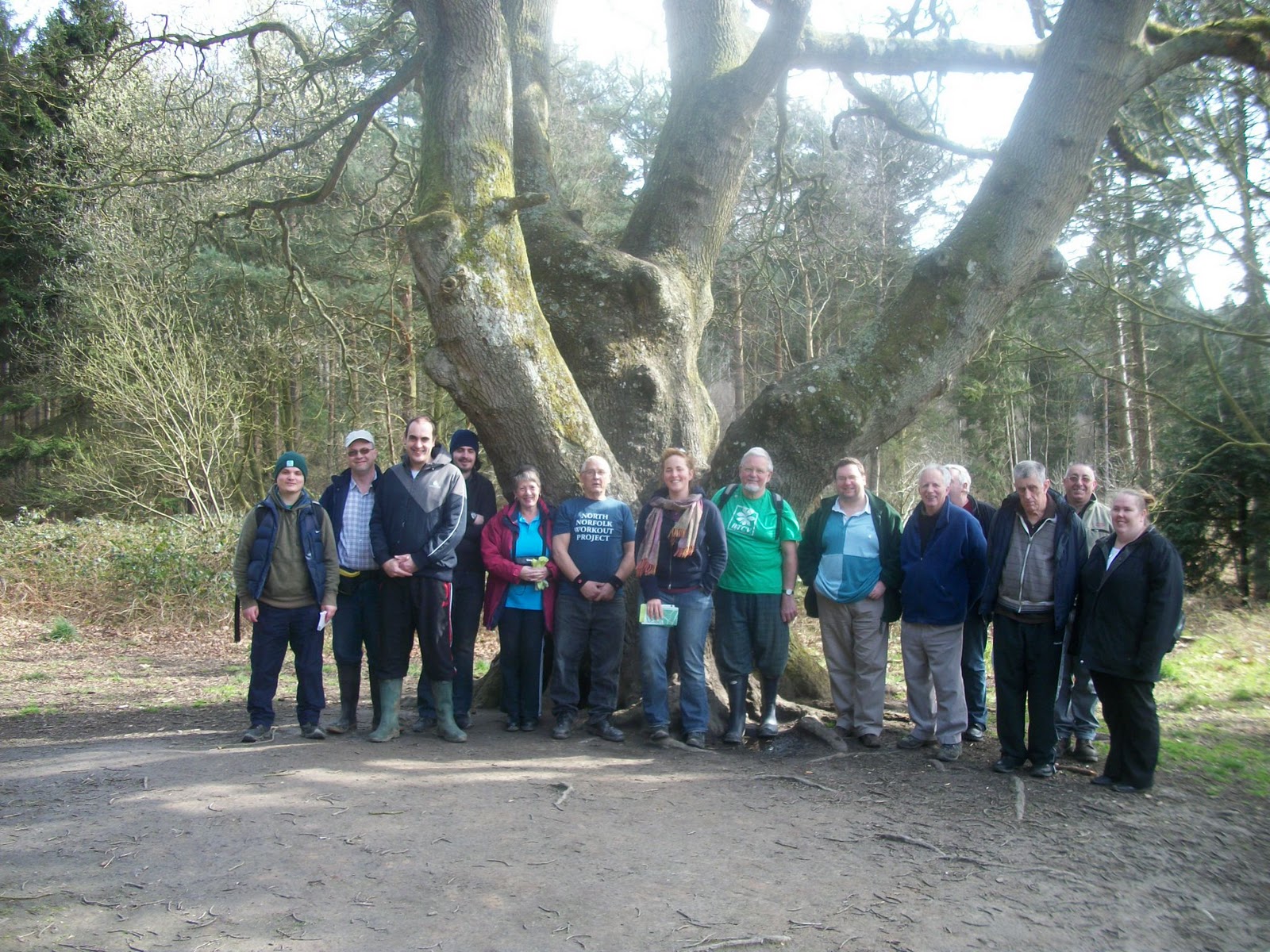
In the summer of 2010, a friend, knowing of my burgeoning interest in nature and the environment, handed me the July programme of a conservation group that had, at that time, been going for nearly a year. Activities included earthworm surveys, tree planting, and the removal of bracken, bramble and other invasive species, among similar endeavours. The group was called the North Norfolk Workout Project

Keen to try it out, I turned up at Cromer train station, one of the pick-up points mentioned on the programme, and duly the project minibus arrived, driven by project manager Mark. After introductions, Mark explained a bit more about the group. The project had been set up by the North Norfolk district Council and BTCV, with input from English Nature and the NHS, amongst other groups. The idea was to undertake outdoor conservation projects in the North Norfolk region, and in the process give volunteers access to nature and improve their physical and mental health.

So off we went to Sadlers Wood near North Walsham - myself, Mark and a half-dozen or so other volunteers, to clear bracken from a wild flower meadow. I must admit, when I saw the amount of bracken, I quailed a bit, and wondered if we could clear it all. But we all got stuck in, and soon large swathes of the stuff had been cleared. I found it surprising and strangely satisfying to see the amount we had done just  a couple of hours.

 After a very pleasant tea break – an essential fixture of each session - some of the group carried out a couple of surveys on behalf of the Open Air Laboratories Network (OPAL), a scheme run by the Natural History Museum that encourages people to investigate certain aspects of the natural world and report their results. That day, we carried out a soil and earthworm survey. This involved  investigating a patch of soil to find out its make-up, (how much sand, how much clay etc.), its acidity, and whether there were any earthworms nearby. The next survey involved checking trees for specific types of lichen to determine the levels of nitrogen in the air - some lichens thrive in nitrogen rich air and others do not, so this is a good way of checking air quality. In the event, we found neither earthworms nor lichens of any kind, but the results were sent off, and hopefully the boffins at the NHM can make something of them. I returned home at the end of the day having enjoyed both the work and the surroundings a lot. 


It was after this that a period of ill health prevented me from getting about for a bit, so I was unable to attend any more sessions until September, when I became involved in earnest. I attended a wildlife walk in Bacton woods with Mark's colleague Fin, and saw an unbelievable (to me, at any rate) array of different fungi – 2010 being a bumper year for them. The session after that at Holt Country Park was something of a knees-up to celebrate the Project's 1st anniversary. A good time was had by all, although I did feel a bit guilty attending the event – I had only done 2 sessions prior to this, and I was rubbing shoulders with people who had done 30, 40, or 50 sessions....   Anyway, I got a good vibe from all the other volunteers, they were proud of what they had done in the last year, and Mark and Fin were given cards signed by everybody in appreciation of their efforts.


Since then, I have worked at a number of sites throughout North Norfolk with the Project, performing a lot of different conservation activities.

At Pigneys Wood at North Walsham, one of the earliest tasks I was involved in was raking recently mown grass from a wild flower meadow. This is to prevent the grass from rotting down and swamping the soil – wild flowers prefer thin soil with relatively few nutrients; a case of 'less is more.'  On subsequent sessions there I have found myself cutting reeds, planting hedges and trees and coppicing alders. Coppicing is an ancient form of woodland management, where the trees are cut right down to the stumps, and then allowed to grow, often producing several thin poles from the same stump. In the meantime, the reduced canopy allows more light to reach the forest floor, increasing biodiversity there.  On this particular exercise, these alders had been previously coppiced, and the numerous poles we sawed down were going to be used for an art project. They are flexible enough to be weaved, or 'wattled' into walls. (A more recent coppicing session at Holt Country Park will see the alder trunks used to make a maze – pretty 'amazing' eh?). Incidentally, a similar technique is pollarding. This is where the trees are cut to chest or head height. This is to allow livestock to graze without damaging the new shoots.

A regular activity we carry out around Holt and Sheringham is the removal of rhododendrons, an extremely invasive species. Although it sometimes seems a never-ending task – there are masses of this plant around - 5 or 6 of us can make short work of a large rhodo bush. Indeed, it is quite satisfying to saw through a large trunk of this Triffid-like plant and remove great swathes of it for later burning.

A couple of sessions were at Salthouse Heath, clearing gorse, not only to encourage biodiversity, but to expose 4000-year-old Bronze Age burial mounds for archaeological investigation. One cannot choose but wonder what sort of people they were, or what life was like back then. The photographs below show one particular mound,  before we had begun work, and after we had finished for the afternoon.

Before:

After: 


There was one particular session at Salthouse I shall never forget. We'd finished early to go and see the nearby remains of a World War 2 radar mast. Towards the end of the war, a Lancaster bomber returning from a mission over Germany had to divert from it's home airfield due to thick fog that had covered the whole area. Lost, and flying at around 200 feet, the plane had crashed right into this radar mast. Six of the crew were killed outright, and the seventh died a few hours later. It was very sobering to see the remains of the tower – four concrete 'feet', each with about a meter or so of metal girder sprouting from them, adorned with wooden crucifixes and a poppy wreath. There was a light fog forming when we got there, and knowing what had happened there, it was quite an eerie experience.

On a lighter note, and speaking of fog, I have, perhaps a touch masochistically, gone out in all weathers during my time with the project. Sun, rain, snow; you name it I've been out in it. Holt Country Park, just before Christmas, looked particularly winter-wonderlandy:


The project has also garnered a couple of prestigious awards. One, awarded before I had joined, was for encouraging biodiversity in the region. We were also one of three groups short-listed for the Love Norfolk category for the Norfolk People of the Year awards. I was privileged to be invited, along with fellow volunteer Clive along to the evening by Mark and Fin (we had to wear suits, a real shock to the system!) along with representatives from other organisations involved with the NNWP. In the end, we lost to a community composting group based in Trunch. (Boo! Hiss!) But all in all, it was an honour to be short-listed, and it was a great evening, with some good food and some really inspiring stories of human endeavour. We also managed to filch a few bottles of wine to boot-something extra for Christmas!

So far, I have done some 40 sessions with the North Norfolk Workout Group, and have enjoyed them immensely. I have particularly enjoyed meeting and working with the other volunteers, who are from a variety of backgrounds. Some are college students studying the countryside and the environment. A couple of others already have degrees in similar fields. All have brought their knowledge to the Project in one way or another. Some, like me, are unemployed and are seeking to gain new skills and experience. Still others have come on the Project to meet new people and to just get out of the house and do something worthwhile. But whatever the reasons, I think I can say that we have all got something out of the North Norfolk Workout.


Andrew Gorton is an Open University student, London born but now living on the North Norfolk coast.